
The industry is at a crossroads, now more than ever, as initiatives for digital transformation in oil and gas are becoming a necessity for companies to stay competitive. According to the IEA, capital flows to the energy sector continue to rise and could potentially reach USD 3.3 trillion by the end of 2025, with around USD 2.2 trillion flowing to clean energy, twice as much as the amount allocated to fossil fuels of USD 1.1 trillion.
This difference emphasizes the urgent reality that traditional energy companies must embrace the digital transformation of oil and gas solutions, not just to remain competitive, but to justify their continued relevance in an increasingly sustainability-focused energy era.
The convergence of AI and IoT in oil and gas for predictive operations
AI is receiving massive investment, with $124.3 billion alone in 2024. However, while 62 percent of companies are experimenting with AI agents, nearly two-thirds still haven't scaled AI across their operations. That means everyone's buying in, but few are making it work.
The oil and gas industry tells the same story. An EY survey found that 50 percent of oil and gas companies are already utilizing digital twin technology to manage their assets. These virtual replicas extract data from IoT sensors, ERP systems, and SCADA systems to predict failures, optimize production, and provide operators with complete visibility. It's one of the most promising digital oilfield trends we're seeing in 2026. On paper, it's transformative. However, that same EY research revealed that most of these technologies aren't living up to expectations.
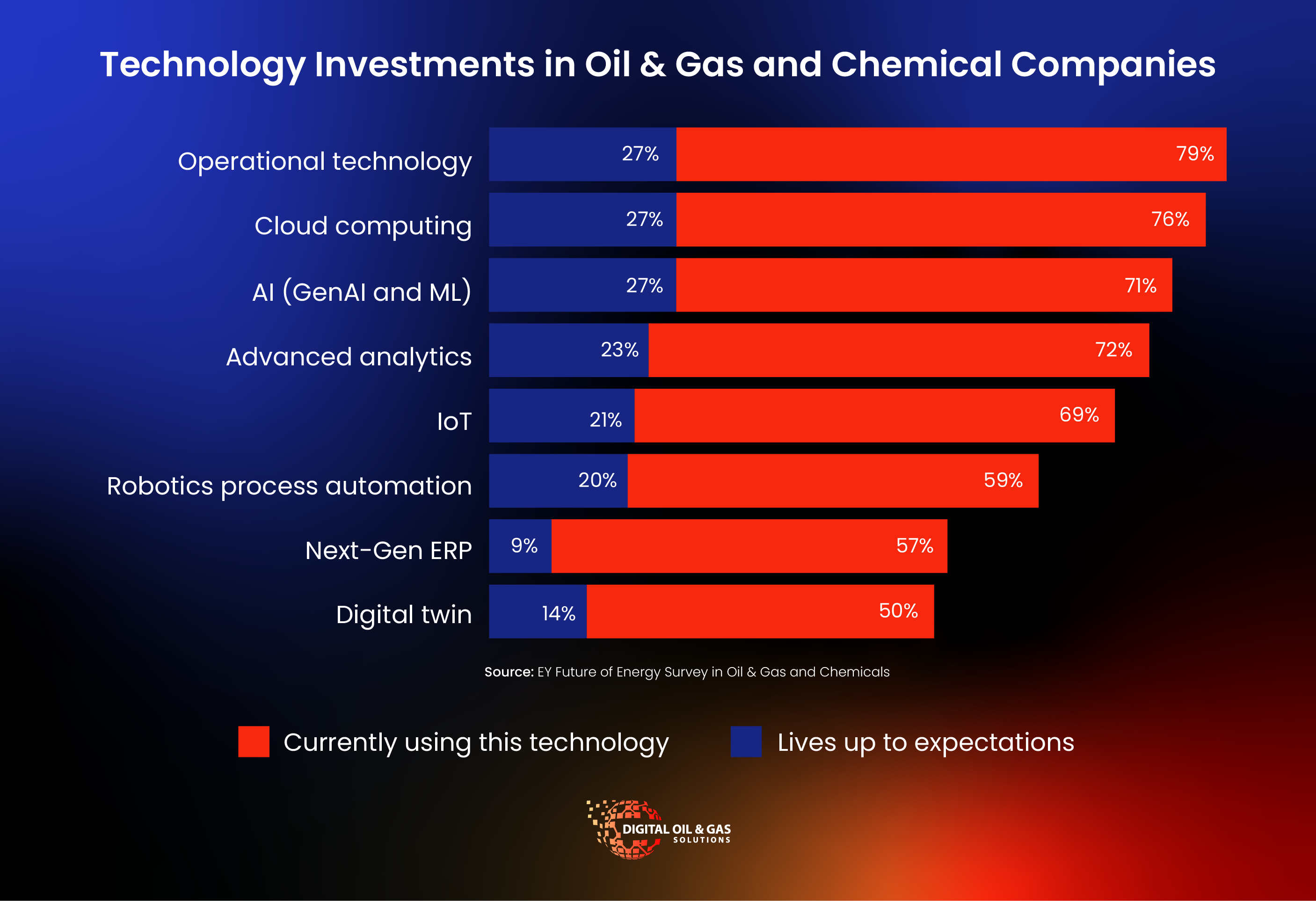
Companies are investing in flashy tech instead of choosing solutions that actually improve day-to-day operations, resulting in an increase in costs without the returns to justify them.
Digital twins and IoT in oil and gas, powered by AI analytics, can absolutely turn reactive maintenance into a predictive strategy, but only if the technology adapts to the team's needs and project realities—not the other way around. Otherwise, you're just burning CapEx and OpEx on tools nobody uses.
Advancing sustainability with green IT and carbon capture technology
Sustainability is becoming a business requirement. Green IT and carbon capture, utilization, and storage (CCUS) technologies are reshaping the future of oil and gas technology by reducing carbon footprints while maintaining operational efficiency. Green IT focuses on optimizing energy consumption across digital infrastructure, while CCUS captures CO₂ emissions before they hit the atmosphere and stores them underground or repurposes them for industrial use.
The best oil and gas digital transformation companies are already acting. ExxonMobil established the US's largest, end-to-end carbon capture system along the U.S. Gulf Coast, with contracts representing roughly 9 million metric tons of CO₂ annually. Other companies are integrating renewable energy into their operations, including solar-powered pumps, wind-assisted offshore platforms, and battery storage for remote facilities.
Traditional energy companies can't ignore this shift. Clients, investors, and governments are demanding lower emissions and transparent sustainability reporting. Companies that adapt their operations to meet these requirements stay competitive. Those that don't risk losing contracts, funding, and regulatory approvals.
Building the resilient, connected digital oilfield
Resilient operations require connectivity, redundancy, and the ability to continue working during disruptions such as extreme weather, network outages, or security incidents. Modern digital oilfields integrate cloud computing, edge computing, and SCADA systems for oil and gas operations to create self-optimizing production environments. The goal is simple: keep operations running no matter what.
Remote operations in oil and gas have matured significantly. Field teams can now monitor and control assets, diagnose problems, and make adjustments without being on-site. Advanced SCADA systems provide remote monitoring and control, but many operators still struggle with legacy infrastructure that's expensive to maintain and difficult to scale. This is where accessible low-cost production solutions come in handy—offering core monitoring and control capabilities without the complexity and cost of traditional systems. Working with the right digital transformation oil and gas provider means selecting technology that suits your operations and aligns with your goals.
The companies that will win in 2026 are those building connected ecosystems, not isolated ones. They're linking wellhead sensors to corporate dashboards, enabling remote experts to support multiple sites efficiently, and using edge computing to process critical data locally when networks fail.
Fortifying operations with proactive cybersecurity strategies
As oil and gas operations become more connected, the attack surface expands. The Cybersecurity and Infrastructure Security Agency have issued multiple warnings about threats targeting SCADA and industrial control systems, highlighting that even basic intrusion techniques can cause severe damage when security hygiene is poor. The consequences range from operational disruptions to physical damage and environmental disasters. For any digital transformation oil and gas company, security must be built into operations from day one, not added as an afterthought.
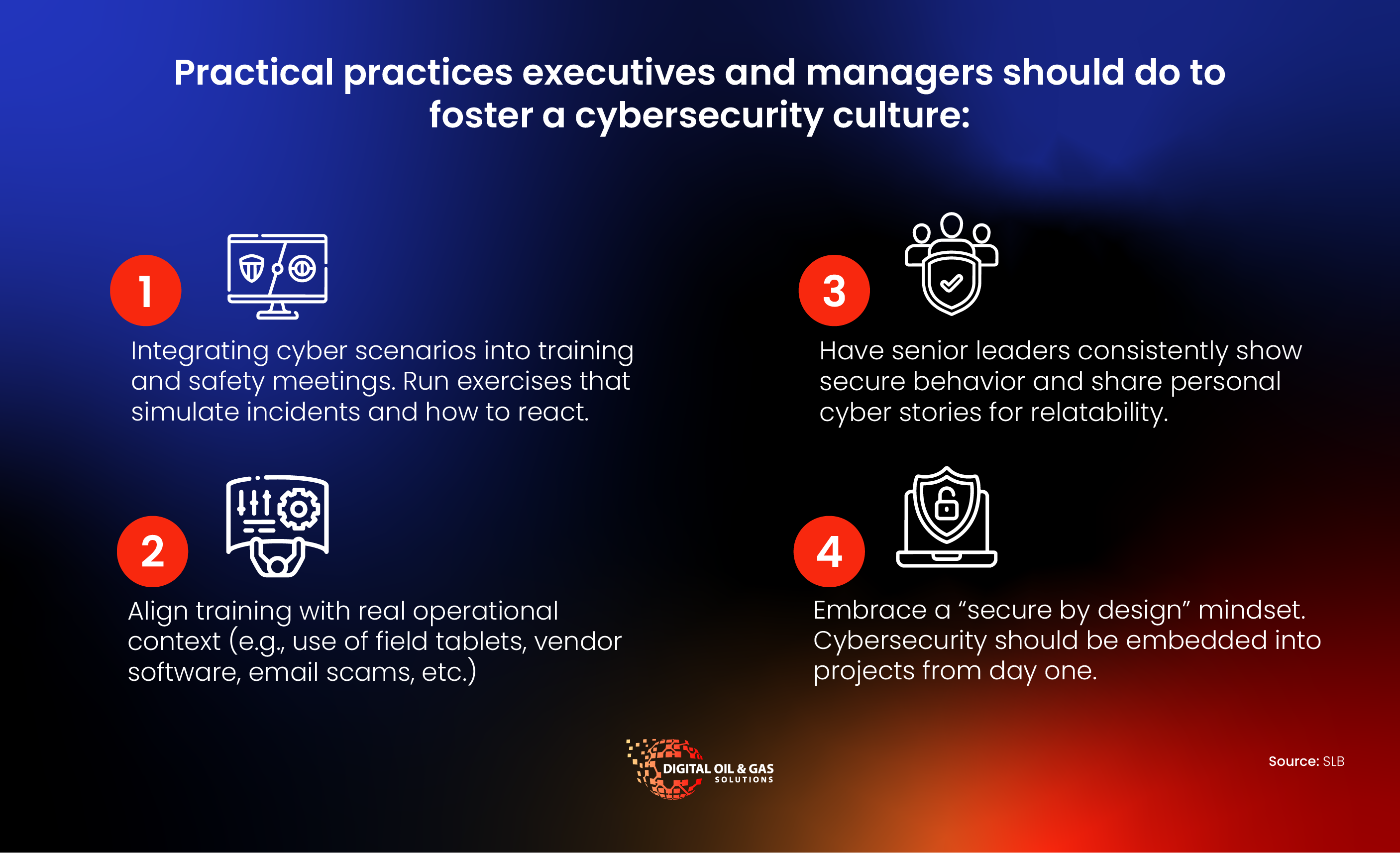
The challenge is that IT and OT convergence creates vulnerabilities. Legacy SCADA systems weren't designed with modern cybersecurity in mind. Many still run with default passwords, outdated software, and internet-exposed interfaces. Digital transformation oil and gas experts know that effective protection requires a multi-layered approach:
-
Network segmentation
-
Zero-trust architectures
-
Continuous monitoring
-
Regular vulnerability assessments
Oil and gas data management systems need robust governance frameworks that protect operational data while enabling the analytics that drive efficiency.
Preparing your digital strategy for the oil and gas industry trends of 2026
The oil and gas company leaders in digital transformation aren't waiting for perfect conditions to implement new technology. Connected digital oilfields are proving that resilience and efficiency can coexist while proactive cybersecurity is protecting the infrastructure that makes it all possible. The organizations that balance operational excellence, sustainability, and security will define the next decade of the industry.
If you're ready to move beyond pilots and scale what works, our digital transformation oil and gas experts can help. We focus on practical, cost-effective solutions that deliver measurable results.
Let’s elevate your operations together.