
In today’s energy landscape, IoT in environmental monitoring is transforming how the oil and gas industry ensures compliance, efficiency, and sustainability. By deploying IoT environmental sensors across drilling sites, refineries, and pipelines, companies can collect continuous data, automate reporting, and gain predictive insights that reduce operational risks. Advanced oil and gas remote monitoring systems now form the backbone of safer, smarter, and more compliant operations.
The Role of IoT in Modern Environmental Monitoring
Environmental compliance has become a critical factor in oil and gas operations. Companies are under constant pressure to minimize emissions, prevent leaks, and adhere to strict environmental regulations. IoT in environmental monitoring enables real-time visibility across dispersed and high-risk sites.
By integrating wireless sensor networks (WSNs) and industrial IoT (IIoT) into the energy industry, operators can track temperature, gas concentration, vibration, and pressure in real time. These smart systems transmit data to cloud-based analytics dashboards, giving operators an instant view of environmental performance.
IoT-powered systems go beyond traditional monitoring—they deliver predictive maintenance in energy environments. Through AI-based models and real-time data analytics, teams can forecast anomalies before they escalate, reducing downtime and avoiding costly incidents.
Discover remote asset monitoring solutions tailored for your environmental and operational needs.
Benefits of Real-Time Data in Oil & Gas Operations
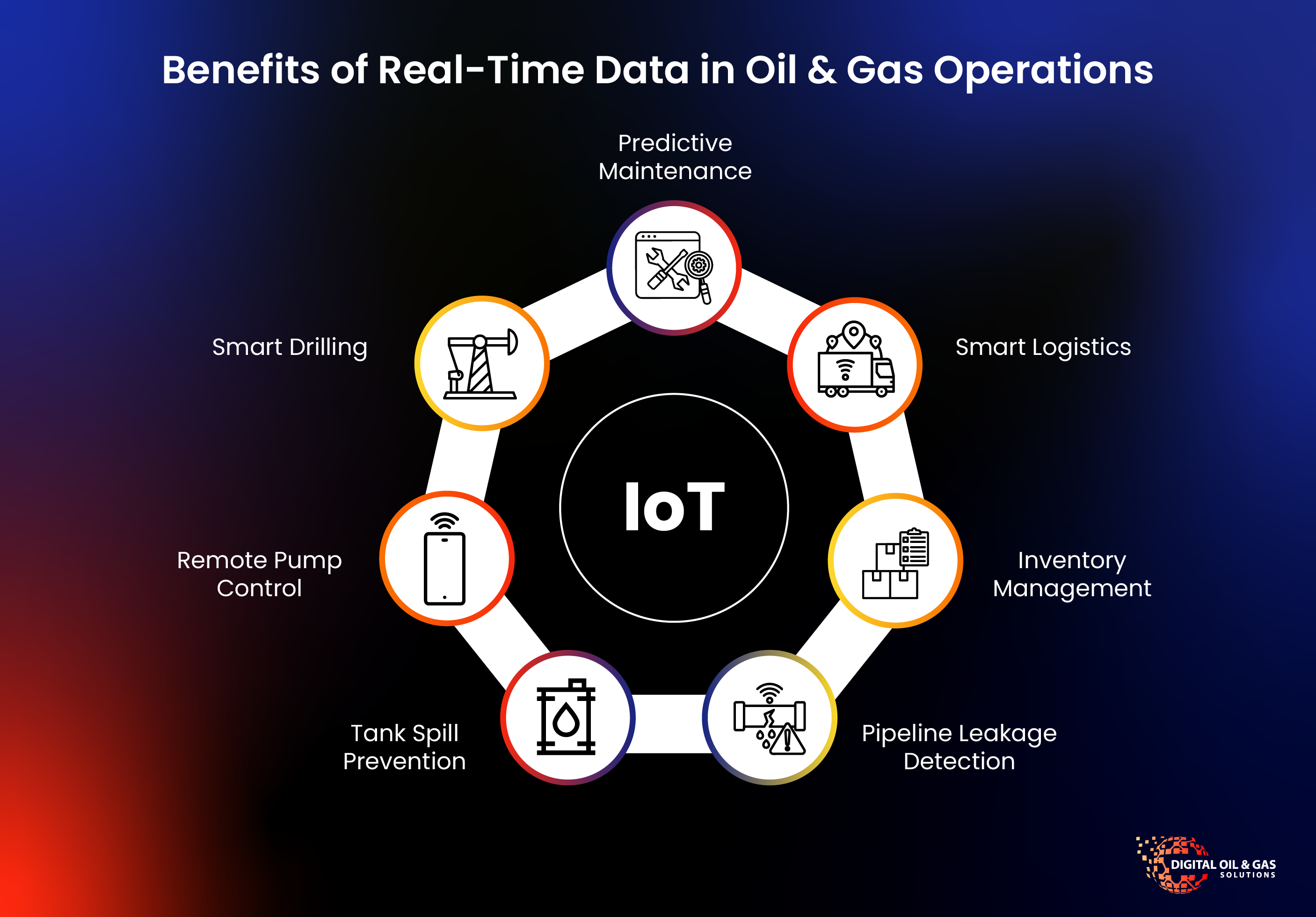
The integration of real time monitoring services into oil and gas systems has revolutionized asset reliability, safety, and compliance. Below are key advantages:
1. Enhanced Environmental Compliance - Automated environmental compliance monitoring ensures constant data capture on emissions, leaks, and waste discharge. Continuous IoT tracking eliminates manual data collection, improving accuracy and transparency in regulatory reporting.
2. Reduced Operational Risks - IoT-enabled digital drilling monitoring solutions can identify early warning signs of spills, blowouts, or emissions breaches. Predictive alerts allow operators to respond immediately, protecting both workers and the environment.
3. Improved Efficiency and Cost Savings - Digital oilfield solutions leverage real-time insights to optimize energy usage, reduce maintenance costs, and extend equipment life. By minimizing unplanned downtime, operators can improve productivity and asset uptime.
4. Proactive Decision-Making - AI-driven smart drilling systems and SCADA systems for oil and gas provide operators with data-rich dashboards. These dashboards highlight trends, performance KPIs, and anomalies—enabling fast, informed decision-making in complex field conditions.
Learn more about our managed services for oil and gas industry that ensure continuous uptime and environmental safety.
Key Technologies Driving Remote Monitoring Systems
The growing complexity of energy operations has spurred the evolution of oil and gas remote monitoring systems that combine advanced hardware and software. Here are the technologies enabling this transformation:
1. IoT Environmental Sensors - These smart sensors measure air quality, vibration, fluid levels, and emissions in real time. They form the foundation of IoT-powered monitoring networks, transmitting data securely through low-power wireless systems.
2. Cloud-Based Analytics Platforms - Modern AI-powered monitoring platforms process massive volumes of field data from drilling, processing, and distribution assets. They provide predictive insights to prevent failures, reduce emissions, and maintain compliance.
3. Digital Twin & Predictive Maintenance Tools - By creating virtual replicas of assets, digital twins simulate performance conditions. Combined with predictive maintenance in energy systems, they enable teams to plan interventions before breakdowns occur.
4. Edge Computing and SCADA Integration - Integrating SCADA systems with IoT enables data to be processed closer to the source. This minimizes latency and ensures critical alerts are addressed instantly—even in remote or bandwidth-limited areas.
5. Secure Connectivity via Industrial IoT - Using industrial IoT (IIoT) in energy ensures reliable and encrypted communication across devices, assets, and enterprise systems. This allows seamless integration with existing IT/OT infrastructure.
Connect with our IoT experts to implement scalable, secure remote monitoring for your field operations.
Challenges and Considerations for IoT Adoption in Energy Business
While IoT offers transformative benefits, successful deployment in oil and gas environments requires addressing several challenges:
1. Harsh Field Conditions
Extreme temperatures, corrosion, and vibration can impact IoT environmental sensors. Selecting rugged, intrinsically safe hardware is crucial for durability and accuracy in field applications.
2. Cybersecurity and Data Privacy
With increasing digitalization, the exposure of critical infrastructure to cyber threats is a growing concern. Companies must implement secure protocols, encrypted data channels, and regular audits to protect their digital oilfield solutions.
3. Integration with Legacy Systems
Many existing operations still rely on older SCADA systems for oil and gas. Integrating IoT devices with these systems requires careful planning, data harmonization, and interoperability testing.
4. Cost and Scalability
Large-scale IoT deployments can be capital-intensive. To maximize ROI, organizations should prioritize high-impact applications such as emissions control, remote asset monitoring, and leak detection before scaling up.
Driving a Sustainable Future Through Connected Intelligence
As the energy transition accelerates, IoT in environmental monitoring plays a vital role in helping oil and gas operators achieve sustainability goals. From leak detection to predictive analytics, IoT technology supports a proactive approach to environmental stewardship.
By combining smart drilling systems, AI-powered analytics, and remote asset monitoring, oil and gas firms can build more transparent, compliant, and efficient operations—minimizing environmental impact while maximizing performance.
Partner with us to deploy IoT-driven environmental monitoring across your operations.