
Why Oil & Gas Companies Need Invoice Automation and Accounting Software
The energy industry runs on precision — from field operations to financial workflows. Yet, one of the most error-prone and time-consuming areas remains invoice management. As margins tighten and reporting requirements grow, oil and gas invoice automation and accounting software are becoming critical for companies seeking to cut costs, reduce delays, and improve financial accuracy.
The Hidden Costs of Manual Invoicing in Oil & Gas Operations
Manual invoicing may seem manageable when volumes are low, but in oil and gas operations — with hundreds of vendors, field tickets, and fluctuating rates — inefficiencies compound quickly.
Common Challenges:
-
Error-Prone Data Entry:
Manual inputs across field tickets, spreadsheets, and ERP systems introduce inconsistencies that lead to billing disputes and delayed payments.
-
Limited Visibility:
Finance teams often lack real-time access to invoice status, making it hard to forecast cash flow or manage vendor relationships effectively.
-
Compliance and Audit Risks:
Paper-based workflows make it difficult to track approvals and meet industry-specific reporting standards.
-
Rising Labor Costs:
Staff spend countless hours reconciling invoices, matching purchase orders, and chasing down missing documentation.
These inefficiencies don’t just waste time, they cost money. Delayed payments can strain vendor relations, while inaccuracies can lead to regulatory noncompliance and lost revenue.
Explore oil and gas industry solutions designed for automation and data-driven control.
How Invoice Automation Streamlines Energy Sector Accounting
Oil and gas automation technologies, especially intelligent invoices and ERP integrations, are transforming back-office operations. Modern oil and gas ERP software connects field operations, procurement, and finance to create an end-to-end digital workflow.
Key Benefits of Invoice Automation
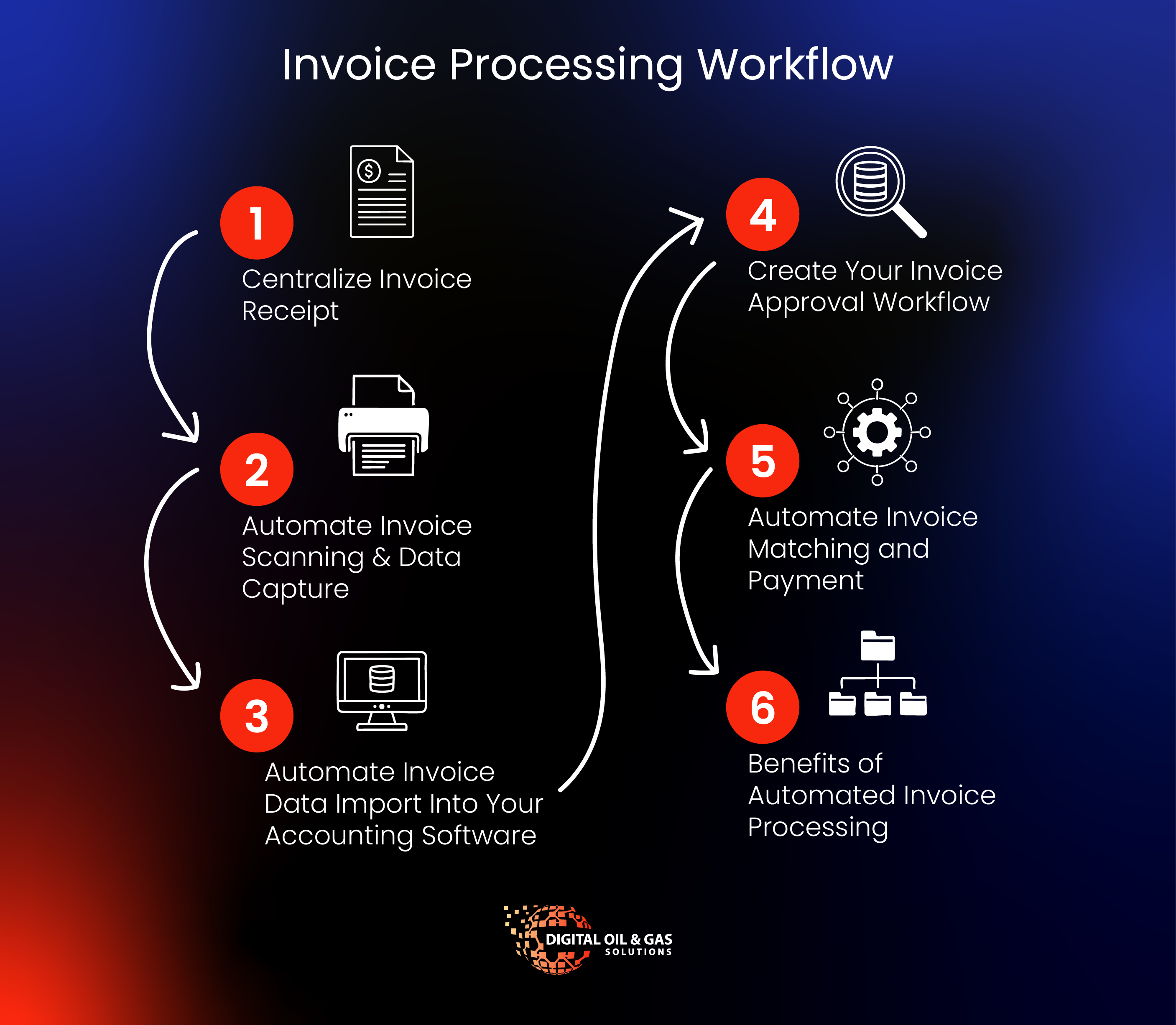
1. AI-Powered Invoice Workflows - Using AI-powered invoice workflows, companies can automatically extract, validate, and classify invoice data. Invoice data extraction powered by machine learning eliminates manual entry, reducing human error by up to 90%.
2. Automated Accounts Payable (AP) - With automated accounts payable, invoices move through digital approval chains based on predefined rules, no more waiting for signatures or manual routing. This workflow automation ensures timely approvals and consistent processing.
3. Procurement-to-Pay Automation - Integrating procurement-to-pay automation allows seamless matching between invoices, purchase orders, and goods receipts. Invoice matching systems identify discrepancies instantly, helping companies avoid overpayments and duplicate billing.
4. Vendor Billing Automation - Vendor billing automation ensures accuracy and transparency, providing vendors with self-service visibility into payment status. This strengthens relationships and eliminates repetitive back-and-forth communication.
5. Paperless and Digital Invoice Processing - Transitioning to paperless invoicing and digital invoice processing aligns with ESG and sustainability goals, while also improving traceability across the organization.
Learn more about our managed services for oil and gas, designed to simplify finance, data, and IT workflows.
Choosing the Right Invoice Automation Solution for Your Oil & Gas Business
Selecting the best invoice automation platform requires a careful evaluation of your existing systems, operational complexity, and integration needs.
1. Integration with ERP and SCADA Systems - A strong solution should integrate seamlessly with your existing oil and gas ERP software and SCADA systems, ensuring smooth data flow between production, procurement, and finance. This allows teams to match field data with invoices automatically—enhancing accuracy and reducing reconciliation time.
2. AI and Machine Learning Capabilities - Look for intelligent invoicing tools with AI-driven features like smart validation, anomaly detection, and automatic coding to general ledger accounts. This minimizes human involvement while maintaining control.
3. Customizable Approval Workflows - Your software should support configurable workflows to fit your internal processes, whether centralized, decentralized, or hybrid. This flexibility ensures all departments stay aligned while maintaining compliance.
4. Security and Compliance - Ensure the platform supports e-signatures, audit trails, and compliance with regional tax and accounting standards. E-invoicing platforms with built-in security controls protect against fraud and unauthorized access.
5. Scalability and Managed Support - Partnering with a provider offering managed services for oil and gas ensures your system evolves with your needs—from initial setup to continuous optimization and support.
Discover how oil and gas invoice automation tools can streamline your accounting and boost efficiency across projects.
The Business Impact: Accuracy, Agility, and ROI
Companies adopting digital invoice processing report faster close cycles, fewer disputes, and significant cost savings.
-
Up to 80% reduction in invoice cycle time
-
40–60% decrease in processing costs
-
Enhanced financial accuracy and compliance tracking
-
Improved vendor satisfaction due to transparency and faster payments
Automating invoicing not only saves time—it turns financial data into actionable insights that support strategic decision-making.
Conclusion: The Future of Oil & Gas Finance is Automated
In an industry where every barrel and every dollar counts, automation isn’t optional, it’s essential. Oil and gas invoice automation and accounting software empower companies to operate smarter, scale faster, and stay compliant in a rapidly evolving market. The next wave of energy innovation won’t just come from the field—it will come from how efficiently we manage data, finance, and operations behind the scenes.
Contact us to learn how intelligent automation can save time, reduce costs, and enhance accuracy.